HW5. MA3160, Due 10/07/2021

Exercise 1.  Three balls are randomly chosen with replacement from an urn containing 2 blue, 3 red, and 2 yellow balls. Let X denote the number of red balls chosen.

  1. What are the possible values of X?
  2. What is the density function of X ?

Exercise 2.  We throw two dice. Let X be the sum.

  1. Compute E(X).
  2. Compute Var(X)

Honors exercise.

An insurance company fi􏰃nds that Mark has a 7% chance of getting into a car accident in the next year. If Mark has any kind of accident then the company guarantees to pay him $10, 000. The company has decided to charge Mark a $180 premium for this one year insurance policy.
(a) Let X be the amount proof􏰃t or loss from this insurance policy in the next year for the insurance company. Find E(X), the expected return for the Insurance company? Should the insurance company charge more or less on its premium?
(b) What amount should the insurance company charge Mark in order to guarantee an expected return of $100?

Posted in MA3160, Uncategorized | Leave a comment

H-type structures

In two works in collaboration with Erlend Grong, Gianmarco Molino and Luca Rizzi, we introduced the notion of H-type structure:

  1. H-type foliations
  2. Comparison theorems on H-type sub-Riemannian manifolds

Consider a triple (\mathbb{M}, \mathcal{H}, g) where \mathbb{M} is a manifold, \mathcal{H} a constant rank sub-bundle of the tangent bundle of T \mathbb{M} and g a Riemannian metric. We say that \mathcal{H} is of H-type if for every smooth vector field Z which is unit and orthogonal to \mathcal{H}, the map J_Z : \mathcal{H} \to \mathcal{H} defined by the relation

g(J_Z X, Y)=g (Z,[Y,X]), \quad X,Y \in \Gamma (\mathcal{H})

satisfies J^2_Z=-\mathbf{Id}_\mathcal{H}. H-type structures are therefore natural generalizations to the Riemannian manifold setting of the H-type groups introduced by A. Kaplan. The sub-Riemannian manifold (\mathcal{H}, g_\mathcal{H}) and its intrinsic geometry is then of special interest and is studied in details in our papers. In the first paper, we prove various classifications theorems and several necessary and sufficient conditions for the existence of H-type structures on a Riemannian manifold. In the second paper, we focus on developing a comparison geometry for the sub-Riemannian manifold (\mathcal{H}, g_\mathcal{H}). In particular, we obtain several sharp sub-Hessian and sub-Laplacian comparison theorems.

The following video is a talk given at the University of Potsdam in March 2019 explaining results from the first paper:

Talk H-type foliations

Posted in Uncategorized | Leave a comment

Lecture notes: An Introduction to Dirichlet Spaces

dirichlet1

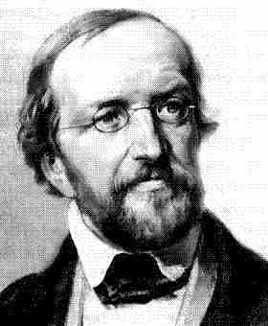
Peter Gustav Lejeune Dirichlet

An introduction to Dirichlet spaces:  Lecture notes

The outline of those (unpolished) lecture notes is the following:

Chapter 1: Semigroups

Chapter 2: Markovian semigroups and Dirichlet forms

Chapter 3: Dirichlet spaces with Gaussian or sub-Gaussian heat kernel estimates

Chapter 4: Strictly local Dirichlet spaces

Slides

Posted in Global analysis in Dirichlet spaces | Leave a comment

Lecture 8. Sobolev inequalities on Dirichlet spaces: The Varopoulos approach

In this lecture, we study Sobolev inequalities on Dirichlet spaces. The  approach we develop is related to  Hardy-Littlewood-Sobolev theory

The link between the Hardy-Littlewood-Sobolev theory and heat kernel upper bounds is due to Varopoulos, but the proof I give below I learnt it from my colleague Rodrigo Bañuelos. It bypasses the Marcinkiewicz interpolation theorem, that was originally used by Varopoulos by using instead the Stein’s maximal ergodic lemma. The advantage of the method is to get an explicit (non sharp) constant for the Sobolev inequality

Let (X,\mathcal{B}) be a good measurable space equipped with a \sigma-finite measure \mu. Let \mathcal E be a Dirichlet form on X. As usual, we denote by P_t the semigroup generated by P_t and we assume P_t 1=1.

We have the following so-called maximal ergodic lemma, which was first proved by Stein. We give here a probabilistic proof since it comes with a nice constant but you can for instance find the original (non probabilistic) proof here.

Lemma:(Stein’s maximal ergodic theorem) Let p > 1. For f \in L^p (X,\mu), denote f^*(x)=\sup_{t \ge 0} |P_t f(x)|. We have
\| f^* \|_{L^p (X,\mu)} \le \frac{p}{p-1} \| f \|_{L^p (X,\mu)}.

Proof: For x \in X, we denote by (X_t^x)_{t \ge 0} the Markov process associated with the semigroup P_t and started at x (we assume that such process exists without commenting on the exact assumptions). We fix T > 0. By construction, for t \le T, we have,
P_{T-t}f (X_T^x) =\mathbb{E} \left( f (X_{2T-t}^x) | X_T^x \right),
and thus
P_{2(T-t)}f (X_T^x) =\mathbb{E} \left( (P_{T-t} f) (X_{2T-t}^x) | X_T^x \right).
As a consequence, we obtain
\sup_{0 \le t \le T} | P_{2(T-t)}f (X_T^x) | \le \mathbb{E} \left(\sup_{0 \le t \le T} | (P_{T-t} f) (X_{2T-t}^x) | \mid X_T^x\right) .
Jensen’s inequality yields then
\sup_{0 \le t \le T} | P_{2(T-t)}f (X_T^x) |^p \le \mathbb{E} \left(\sup_{0 \le t \le T} | (P_{T-t} f) (X_{2T-t}^x) |^p \mid X_T^x\right).
We deduce
\mathbb{E} \left( \sup_{0 \le t \le T} | P_{2(T-t)}f (X_T^x) |^p \right) \le \mathbb{E} \left(\sup_{0 \le t \le T} | (P_{T-t} f) (X_{2T-t}^x) |^p \right).
Integrating the inequality with respect to the measure \mu, we obtain
\left\| \sup_{0 \le t \le T} | P_{2(T-t)}f | \right\|_p \le \left( \int_X \mathbb{E} \left(\sup_{0 \le t \le T} | (P_{T-t} f) (X_{2T-t}^x) |^p \right)d\mu(x)\right)^{1/p}.
By reversibility, we get then
\left\| \sup_{0 \le t \le T} | P_{2(T-t)}f | \right\|_p \le \left( \int_X \mathbb{E} \left(\sup_{0 \le t \le T} | (P_{T-t} f) (X_t^x) |^p \right)d\mu(x)\right)^{1/p}.
We now observe that the process (P_{T-t} f) (X_t^x) is martingale and thus Doob’s maximal inequality gives
\mathbb{E} \left(\sup_{0 \le t \le T} | (P_{T-t} f) (X_t^x) |^p \right)^{1/p} \le \frac{p}{p-1} \mathbb{E} \left( | f(X_T^x)|^p \right)^{1/p}.
The proof is complete. \square

We now turn to the theorem by Varopoulos. In the sequel, we assume that the semigroup P_t admits a measurable heat kernel p(x,y,t).

Theorem: Let n > 0, 0 < \alpha < n, and 1 < p< \frac{n}{\alpha}. If there exists C > 0 such that for every t > 0, x,y \in X,
p(x,y,t) \le \frac{C}{t^{n/2}},
then for every f \in L^p (X,\mu),
\| (-L)^{-\alpha/2} f \|_{\frac{np}{n-p\alpha}} \le \left( \frac{p}{p-1} \right)^{1-\alpha/n} \frac{ 2n C^{\alpha / n}}{ \alpha (n-p\alpha) \Gamma(\alpha /2)} \|f \|_p,

where L is the generator of \mathcal{E}.

Proof: We first observe that the bound
p(x,y,t) \le \frac{C}{t^{n/2}},
implies that |P_t f(x)| \le \frac{C^{1/p}}{t^{n/2p}} \| f \|_p. Denote I_\alpha f (x)=(-L)^{-\alpha/2} f (x). We have
I_\alpha f (x)=\frac{1}{\Gamma(\alpha /2) } \int_0^{+\infty} t^{\alpha /2 -1 }P_t f (x) dt
Pick \delta > 0, to be later chosen, and split the integral in two parts:
I_\alpha f (x)=J_\alpha f(x) +K_\alpha f (x),
where J_\alpha f (x)=\frac{1}{\Gamma(\alpha /2) } \int_0^{\delta} t^{\alpha /2 -1 }P_t f (x) dt and K_\alpha f (x)=\frac{1}{\Gamma(\alpha /2) } \int_\delta^{+\infty} t^{\alpha /2 -1 }P_t f (x) dt. We have
| J_\alpha f (x) | \le \frac{1}{\Gamma(\alpha /2) } \int_0^{+\infty} t^{\alpha /2 -1 }dt | f^* (x) | =\frac{2}{\alpha \Gamma(\alpha /2) } \delta^{\alpha /2} | f^* (x) |.
On the other hand,
| K_\alpha f(x)| \le \frac{1}{\Gamma(\alpha /2) } \int_\delta^{+\infty} t^{\alpha /2 -1 } | P_t f (x)| dt
\le \frac{C^{1/p}}{\Gamma(\alpha /2) } \int_\delta^{+\infty} t^{\frac{\alpha} {2}-\frac{n}{2p} -1 } dt \| f \|_p
\le \frac{C^{1/p}}{\Gamma(\alpha /2) } \frac{1}{-\frac{\alpha} {2}+\frac{n}{2p} }\delta^{\frac{\alpha} {2}-\frac{n}{2p} } \| f \|_p .
We deduce
| I_\alpha f (x) | \le \frac{2}{\alpha \Gamma(\alpha /2) } \delta^{\alpha /2} | f^* (x) |+ \frac{C^{1/p}}{\Gamma(\alpha /2) } \frac{1}{-\frac{\alpha} {2}+\frac{n}{2p} }\delta^{\frac{\alpha} {2}-\frac{n}{2p} } \| f \|_p.
Optimizing the right hand side of the latter inequality with respect to \delta yields
| I_\alpha f (x) |\le \frac{ 2n C^{\alpha / n}}{ \alpha (n-p\alpha) \Gamma(\alpha /2)} \|f \|^{\alpha p /n}_p |f^*(x)|^{1-p\alpha/n}.
The proof is then completed by using Stein’s maximal ergodic theorem \square

A special case, of particular interest, is when \alpha =1 and p=2. We get in that case the following Sobolev inequality:

Theorem: Let n > 2. If there exists C > 0 such that for every t > 0, x,y \in X,
p(x,y,t) \le \frac{C}{t^{n/2}},
then for every f \in\mathcal{F},
\| f \|_{\frac{2n}{n-2}} \le 2^{1-1/n} \frac{ 2n C^{1 / n}}{ (n-2) \sqrt{\pi}} \sqrt{\mathcal{E}(f) }.

We mention that the constant in the above Sobolev inequality is not sharp even in the Euclidean case.

In many situations, heat kernel upper bounds with a polynomial decay are only available in small times the following result is thus useful:

Theorem: Let n > 0, 0 < \alpha < n, and 1 < p < \frac{n}{\alpha}. If there exists C > 0 such that for every 0 < t \le 1, x,y \in X,
p(x,y,t) \le \frac{C}{t^{n/2}},
then, there is constant C' such that for every f \in L^p(X,\mu),
\| (-L+1)^{-\alpha/2} f \|_{\frac{np}{n-p\alpha}} \le C' \|f \|_p

Proof: We apply the Varopoulos theorem to the semigroup Q_t=e^{-t} P_t. Details are let to the reader \square

The following corollary shall be later used:

Corollary: Let n > 2. If there exists C > 0 such that for every 0 < t \le 1, x,y \in X,
p(x,y,t) \le \frac{C}{t^{n/2}},
then there is constant C' such that for every f \in \mathcal{F},
\| f \|_{\frac{2n}{n-2}} \le C' \left( \sqrt{\mathcal{E}(f)} + \| f \|_2 \right)

Posted in Global analysis in Dirichlet spaces, Uncategorized | 1 Comment

Lecture 7. Diffusion operators as Markovian operators

In this section, we consider a diffusion operator
L=\sum_{i,j=1}^n \sigma_{ij} (x) \frac{\partial^2}{ \partial x_i \partial x_j} +\sum_{i=1}^n b_i (x)\frac{\partial}{\partial x_i},
where b_i and \sigma_{ij} are continuous functions on \mathbb{R}^n and for every x \in \mathbb{R}^n, the matrix (\sigma_{ij}(x))_{1\le i,j\le n} is a symmetric and non negative matrix. Our goal is to prove that if L is essentially self-adjoint, then the semigroup it generates is Markovian. We will also prove that this semigroup is solution of the heat equation associated to L.

As before, we will assume that there is Borel measure \mu which is equivalent to the Lebesgue measure and that symmetrizes L in the sense that for every smooth and compactly supported functions f,g : \mathbb{R}^n \rightarrow \mathbb{R},
\int_{\mathbb{R}^n} g Lf d\mu= \int_{\mathbb{R}^n} fLg d\mu.

Our first goal will be to prove that if L is essentially self-adjoint, then the semigroup it generates in L^2(\mathbb{R}^n, \mu) is Markovian. The key lemma is the so-called Kato inequality:

Lemma: Let L be a diffusion operator on \mathbb{R}^n with symmetric and invariant measure \mu. Let u \in C^\infty_0 (\mathbb{R}^n). Define
\mathbf{sgn} \text{ }u=0 \quad \text{ if } u(x)=0,
                                   =\frac{u(x)}{|u(x)|} \quad \text{ if } u(x)\neq 0.
In the sense of distributions, we have the following inequality
L |u | \ge ( \mathbf{sgn} \text{ }u ) Lu.

Proof: If \phi is a smooth and convex function and if u is assumed to be smooth, it is readily checked that
L \phi(u)=\phi'(u) Lu +\phi''(u) \Gamma(u,u) \ge \phi'(u)Lu.
By choosing for \phi the function
\phi_\varepsilon(x)=\sqrt{x^2 +\varepsilon^2}, \quad \varepsilon >0,
we deduce that for every smooth function u \in C_0^\infty (\mathbb{R}^n),
L\phi_\varepsilon (u) \ge \frac{u}{\sqrt{x^2 +\varepsilon^2}} Lu.
As a consequence this inequality holds in the sense of distributions, that is for every f \in \mathcal{C}_0^\infty  (\mathbb{R}^n), f \ge 0,
\int_{\mathbb{R}^n} f L\phi_\varepsilon (u) d\mu \ge \int_{\mathbb{R}^n} f \frac{u}{\sqrt{u^2 +\varepsilon^2}} Lu d\mu
Letting \varepsilon \to 0 gives the expected result. \square

From Kato inequality, it is relatively easy to see that if L is an essentially self-adjoint diffusion operator, then the associated quadratic form is Markovian. As a consequence, we deduce the following theorem.

Proposition: Let L be a diffusion operator on \mathbb{R}^n with symmetric and invariant measure \mu. Assume that L is essentially self-adjoint, then the semigroup it generates is Markovian.

Next, we connect the semigroup associated to a diffusion operator L to the parabolic following Cauchy problem:
\frac{\partial u}{\partial t}= L u, \quad u (0,x)=f(x).

In the remainder of the section, we assume that the diffusion operator L is elliptic with smooth coefficients and that there exists an increasing sequence h_n\in C_0^\infty(\mathbb{R}^n), $0 \le h_n \le 1$, such that h_n\nearrow 1 on
\mathbb{R}^n, and ||\Gamma (h_n,h_n)||_{\infty} \to 0, as n\to \infty. In particular, we know from this assumption that the operator L is essentially self-adjoint.

Proposition:  Let f \in L^p(\mathbb{R}^n,\mu), 1 \le p \le \infty, and let
u (t,x)= P_t f (x), \quad t \ge 0, x\in \mathbb{R}^n.
Then u is smooth on (0,+\infty)\times \mathbb{R}^n and is a strong solution of the Cauchy problem
\frac{\partial u}{\partial t}= L u,\quad u (0,x)=f(x).

Proof: For \phi \in C^\infty_0 ((0,+\infty) \times \mathbb{R}^n), we have

\int_{\mathbb{R}^n \times \mathbb{R}} \left( \left( -\frac{\partial}{\partial t} -L \right) \phi (t,x) \right) u(t,x) d\mu(x) dt  =\int_{\mathbb{R}} \int_{\mathbb{R}^n} \left( \left( -\frac{\partial}{\partial t} -L \right) \phi (t,x) \right) P_t f (x) dx dt
= \int_{\mathbb{R}} \int_{\mathbb{R}^n} P_t \left( \left( -\frac{\partial}{\partial t} -L \right) \phi (t,x) \right) f (x) dx dt
= \int_{\mathbb{R}} \int_{\mathbb{R}^n} -\frac{\partial}{\partial t} \left( P_t \phi (t,x) f(x) \right) dx dt
=0

Therefore u is a weak solution of the equation \frac{\partial u}{\partial t}= L u. Since u is smooth it is also a strong solution.
\square

We now address the uniqueness of solutions.

Proposition:  Let v(x,t) be a non negative function such that
\frac{\partial v}{\partial t} \le L v,\quad v(x,0)=0,
and such that for every t >0,
\| v ( \cdot,t) \|_{L^p(\mathbb{R}^n,\mu)} <+\infty,
where 1 <p <+\infty. Then v(x,t)=0.

Proof: Let x_0 \in X and h \in C_0^\infty(\mathbb{R}^n). Since u is a subsolution with the zero initial data, for any \tau\in (0,T),
\int_0^\tau \int_{\mathbb{R}^n} h^2(x) v^{p-1}(x,t) L v(x,t) d\mu(x) dt
\geq  \int_0^\tau \int_{\mathbb{R}^n} h^2(x) v^{p-1} \frac{\partial v}{\partial t} d\mu(x) dt
=  \frac{1}{p} \int_0^\tau \frac{\partial }{\partial t} \left( \int_{\mathbb{R}^n} h^2(x) v^{p} d\mu(x)\right) dt
=  \frac{1}{p}\int_{\mathbb{R}^n} h^2(x) v^{p}(x,\tau) d\mu(x).
On the other hand, integrating by parts yields
\int_0^\tau \int_{\mathbb{R}^n} h^2(x) v^{p-1}(x,t) L v(x,t) d\mu(x) dt = - \int_0^\tau \int_{\mathbb{R}^n} 2h v^{p-1} \Gamma(h,v) d\mu dt - \int_0^\tau \int_X h^2 (p-1) v^{p-2} \Gamma(v) d\mu dt .
Observing that
0\leq  \left(\sqrt{\frac{2}{p-1}\Gamma(h)}v - \sqrt{\frac{p-1}{2}\Gamma(v)}h \right)^2 \leq \frac{2}{p-1}\Gamma(h)v^2 + 2 \Gamma(h,v) h v +\frac{p-1}{2}\Gamma(v)h^2 ,
we obtain the following estimate.
\int_0^\tau \int_{\mathbb{R}^n} h^2(x) v^{p-1}(x,t) L v(x,t) d\mu(x) dt
\leq \int_0^\tau \int_{\mathbb{R}^n} \frac{2}{p-1} \Gamma(h) v^p d\mu dt - \int_0^\tau \int_{\mathbb{R}^n} \frac{p-1}{2}h^2 v^{p-2} \Gamma(v) d\mu dt
= \int_0^\tau \int_{\mathbb{R}^n} \frac{2}{p-1} \Gamma(h) v^p d\mu dt - \frac{2(p-1)}{p^2} \int_0^\tau \int_{\mathbb{R}^n} h^2 \Gamma(v^{p/2}) d\mu dt .

Combining with the previous conclusion we obtain ,
\int_X h^2(x) v^{p}(x,\tau) d\mu(x) + \frac{2(p-1)}{p} \int_0^\tau \int_{\mathbb{R}^n} h^2 \Gamma(v^{p/2}) d\mu dt \leq \frac{2 p}{(p-1) } \| \Gamma(h) \|_\infty^2 \int_0^\tau \int_{\mathbb{R}^n} v^p d\mu dt.
By using the previous inequality with an increasing sequence h_n\in C_0^\infty({\mathbb{R}^n}), 0 \le h_n \le 1, such that h_n\nearrow 1 on {\mathbb{R}^n}, and ||\Gamma (h_n,h_n)||_{\infty} \to 0, as n\to \infty, and letting n \to +\infty, we obtain \int_X v^{p}(x,\tau) d\mu(x)=0 thus v=0. \square

As a consequence of this result, any solution in L^p({\mathbb{R}^n},\mu), 1<p<+\infty of the heat equation \frac{\partial u}{\partial t}= L u is uniquely determined by its initial condition, and is therefore of the form u(t,x)=P_tf(x). We stress that without further conditions, this result fails when p=1 or p=+\infty.

Posted in Global analysis in Dirichlet spaces | Leave a comment

Lecture 6. The Lp theory of Markovian semigroups

Our goal, in this lecture, is to define, for 1 \le p \le +\infty, P_t on L^p(X,\mu). This may be done in a natural way by using the Riesz-Thorin interpolation theorem that we recall below.

Theorem: [Riesz-Thorin interpolation theorem] Let 1 \le p_0, p_1,q_0,q_1 \le \infty, and \theta \in (0,1). Define  1 \le p,q \le \infty by

\frac{1}{p}=\frac{1-\theta}{p_0} + \frac{\theta}{p_1}, \quad \frac{1}{q}=\frac{1-\theta}{q_0} + \frac{\theta}{q_1}.
If T is a linear map such that
T:L^{p_0} \rightarrow L^{q_0}, \quad \| T \|_{ L^{p_0} \rightarrow L^{q_0} } =M_0
T:L^{p_1} \rightarrow L^{q_1}, \quad \| T \|_{ L^{p_1} \rightarrow L^{q_1} } =M_1,
then, for every f \in L^{p_0} \cap L^{p_1},
\| T f \|_q \le M_0^{1-\theta} M_1^{\theta} \| f \|_p.
Hence T extends uniquely as a bounded map from L^{p} to L^{q} with
\| T \|_{ L^{p} \rightarrow L^{q} } \le M_0^{1-\theta} M_1^{\theta} .

The statement that T is a linear map such that
T:L^{p_0} \rightarrow L^{q_0}, \quad \| T \|_{ L^{p_0} \rightarrow L^{q_0} } =M_0
T:L^{p_1} \rightarrow L^{q_1}, \quad \| T \|_{ L^{p_1} \rightarrow L^{q_1} } =M_1,
means that there exists a map T: L^{p_0} \cap L^{p_1}\rightarrow L^{q_0} \cap L^{q_1} with
\sup_{ f \in L^{p_0} \cap L^{p_1} , \| f \|_{p_0} \le 1 } \| Tf \|_{q_0} =M_0
and
\sup_{ f \in L^{p_0} \cap L^{p_1} , \| f \|_{p_1} \le 1 } \| Tf \|_{q_1} =M_1.
In such a case, T can be uniquely extended to bounded linear maps T_0: L^{p_0} \rightarrow L^{q_0} , T_1: L^{p_1} \rightarrow L^{q_1}. With a slight abuse of notation, these two maps are both denoted by T in the theorem.

We now are in position to state the following theorem:

Theorem: Let (P_t)_{t \ge 0} be a strongly continuous self-adjoint contraction Markovian semigroup on L^2(X,\mu). The space L^1 \cap L^{\infty} is invariant under P_t and P_t may be extended from L^1 \cap L^{\infty} to a contraction semigroup (P^{(p)}_t)_{t \ge 0} on L^{p} for all 1 \le p \le \infty: For f \in L^p,
\| P_t f \|_{ L^p} \le \| f \|_{ L^p}.
These semigroups are consistent in the sense that for f \in L^p \cap L^{q},
P^{(p)}_t f=P^{(q)}_t f.

Proof: If  f,g \in L^1 \cap L^{\infty} which is a subset of L^1 \cap L^{\infty}, then,
\left| \int_{X} (P_t f) g d\mu \right|  = \left| \int_{X} f(P_t g) d\mu \right |
 \le \| f \|_{ L^1} \| P_t g \|_{ L^\infty}
 \le \| f \|_{ L^1} \| g \|_{ L^\infty}.
This implies
\| P_t f \|_{ L^1} \le \| f \|_{ L^\infty}.
The conclusion follows then from the Riesz-Thorin interpolation theorem.

Exercise:  Show that if f \in L^{p} and g \in L^{q} with \frac{1}{p}+\frac{1}{q}=1 then,
\int_{\mathbb{R}^n} f P^{(q)}_t g d\mu=\int_{\mathbb{R}^n} g P^{(p)}_t f d\mu.

Exercise:

1) Show that for each f \in L^{1}, the L^{1}-valued map t \rightarrow P^{(1)}_t f is continuous.
2) Show that for each f \in L^{p}, 1<p<2, the L^{p}-valued map t \rightarrow P^{(p)}_t f is continuous.
3) Finally, by using the reflexivity of L^{p}, show that for each f \in L^{p} and every p \ge 1, the L^{p}-valued map t \rightarrow P^{(p)}_t f is continuous.

We mention, that in general, the L^{\infty} valued map t \rightarrow P^{(\infty)}_t f is not continuous.

Posted in Global analysis in Dirichlet spaces, Uncategorized | Leave a comment

Lecture 5. Dirichlet forms

As in the previous lecture, let (X, \mathcal{B}, \mu) be a good measurable space equipped with a \sigma-finite measure \mu.

Definition:  A function v on X is called a normal contraction of the function u if for almost every x,y \in X,
| v(x)-v(y)| \le |u(x) -u(y)| \text{ and } |v(x)| \le |u(x)|.

Definition:   Let (\mathcal{E},\mathcal{F}=\mathbf{dom}(\mathcal{E})) be a densely defined closed symmetric form on L^2(X,\mu).
The form \mathcal{E} is called a Dirichlet form if it is Markovian, that is, has the property that if u \in \mathcal{F} and v is a normal contraction of u then v \in \mathcal{F} and \mathcal{E}(v,v) \le \mathcal{E} (u,u).

The main theorem is the following.

Theorem:  Let (P_t)_{t \ge 0} be a strongly continuous self-adjoint contraction semigroup on L^2(X,\mu). Then, (P_t)_{t \ge 0} is a Markovian semigroup if and only if the associated closed symmetric form on L^2(X,\mu) is a Dirichlet form.

Proof: Let (P_t)_{t \ge 0} be a strongly continuous self-adjoint contraction Markovian semigroup on L^2(X,\mu). There exists a transition function \{p_t,t \geq 0 \} on X such that for every u \in L^\infty(X,\mu) and a.e. x \in X
P_tu (x)=\int_X u(y) p_t(x,dy), \quad t > 0.
Denote
k_t(x)= P_t1 (x)= \int_X p_t(x,dy).
We observe that from the Markovian property of P_t, we have 0 \le k_t \le 1 a.e.
We have then
\frac{1}{2} \int_X \int_X (u(x)-u(y))^2 p_t(x,dy) d\mu(x)=\int_X u(x)^2 k_t(x)d\mu(x)-\int_X u(x) P_t u (x) d\mu(x).
Therefore,
\langle u-P_t u,u \rangle=\frac{1}{2} \int_X \int_X (u(x)-u(y))^2 p_t(x,dy) d\mu(x)+\int_X u(x)^2 (1-k_t(x))d\mu(x).
Let us now assume that u \in \mathcal{F} and that v is a normal contraction of u. One has
\int_X \int_X (v(x)-v(y))^2 p_t(x,dy) d\mu(x) \le \int_X \int_X (u(x)-u(y))^2 p_t(x,dy) d\mu(x)
and
\int_X v(x)^2 (1-k_t(x))d\mu(x) \le \int_X u(x)^2 (1-k_t(x))d\mu(x).
Therefore,
\langle v-P_t v,v \rangle \le \langle u-P_t u,u \rangle
Since u \in \mathcal{F}, one knows that \frac{1}{t}\langle u-P_t u,u \rangle converges to \mathcal{E}(u) when t \to 0. Since \frac{1}{t} \langle v-P_t v,v \rangle is non-increasing and bounded it does converge when t \to 0. Thus v \in \mathcal{F} and
\mathcal{E}(v) \le \mathcal{E}(u).
One concludes that \mathcal E is Markovian.

Now, consider a Dirichlet form \mathcal E and denote by P_t the associated semigroup in L^2(X,\mu) and by A its generator.
The main idea is to first prove that for \lambda >0, the resolvent operator (\lambda \mathbf{Id}-A)^{-1} preserves the positivity of function. Then, we may conclude by the fact that for f \in L^2(X,\mu), in the L^2(X,\mu) sense
P_tf=\lim_{n \to +\infty} \left( \mathbf{Id} -\frac{t}{n} L\right)^{-n}f.

Let \lambda >0. We consider on \mathcal{F} the norm
\| f \|^2_{\lambda} =\| f \|^2_{L^2(X,\mu) }+\lambda\mathcal{E}(f,f)
From the Markovian property of \mathcal E, if u \in \mathcal{F}, then |u| \in \mathcal{F} and
\mathcal{E}(|u|, |u|) \le \mathcal{E}(u, u).

We consider the bounded operator
\mathbf{R}_\lambda=( \mathbf{Id}-\lambda A)^{-1}
that goes from L^2(X,\mu) to \mathcal{D}(A)\subset \mathcal{F}.
For f \in \mathcal{F} and g \in L^2(X,\mu) with g \ge 0, we have
\langle | f | , \mathbf{R}_\lambda g \rangle_\lambda= \langle | f | , \mathbf{R}_\lambda g \rangle_{L^2(X,\mu)}-\lambda \langle |f| , A\mathbf{R}_\lambda g \rangle_{L^2(X,\mu)}
=\langle |f|, (\mathbf{Id}-\lambda A) \mathbf{R}_\lambda g \rangle_{L^2(X,\mu)}
=\langle |f|, g \rangle_{L^2(X,\mu)}
\ge | \langle f, g \rangle_{L^2(X,\mu)}|
\ge |\langle f , \mathbf{R}_\lambda g \rangle_\lambda|.

Moreover, from previous inequality , for f \in \mathcal{F},
\|\text{ } | f|\text{ } \|_\lambda^2  =\| \text{ }| f |\text{ } \|_{L^2(X,\mu)}^2+\lambda \mathcal{E}(|f|,|f|)
 \le \| f \|_{L^2(X,\mu)}^2+\lambda \mathcal{E}(f,f)
 \le \| f \|_\lambda^2.

By taking f= \mathbf{R}_\lambda g in the two above sets of inequalities, we draw the conclusion
|\langle \mathbf{R}_\lambda g , \mathbf{R}_\lambda g \rangle_\lambda| \le \langle | \mathbf{R}_\lambda g | , \mathbf{R}_\lambda g \rangle_\lambda \le \|\text{ } | \mathbf{R}_\lambda g|\text{ } \|_\lambda \|\mathbf{R}_\lambda g\|_\lambda\le |\langle \mathbf{R}_\lambda g , \mathbf{R}_\lambda g \rangle_\lambda|.
The above inequalities are therefore equalities which implies
\mathbf{R}_\lambda g = | \mathbf{R}_\lambda g|.
As a conclusion if g \in L^2(X,\mu) is a.e. \ge 0, then for every \lambda >0, ( \mathbf{Id}-\lambda A)^{-1} g \ge 0 a.e.. Thanks to the spectral theorem, in L^2(X,\mu),
P_t g=\lim_{n \to +\infty} \left( \mathbf{Id} -\frac{t}{n} A\right)^{-n}g.
By passing to a subsequence that converges pointwise almost surely, we deduce that P_t g \ge 0 almost surely.
The proof of
g \le 1, \text{ a.e } \implies P_t g \le 1, \text{ a.e }.
follows the same lines and is let as an exercise to the reader. \square.

Posted in Global analysis in Dirichlet spaces | Leave a comment

Lecture 4. Markovian semigroups

Let (X, \mathcal{B}) be a measurable space. We say that (X, \mathcal{B}) is a good measurable space if there is a countable family generating \mathcal{B} and if every finite measure \gamma on (X \times X, \mathcal{B} \otimes \mathcal{B}) can be decomposed as

\gamma (dx dy)=k(x,dy) \gamma_1 (dx)

where \gamma_1 is the projection of \gamma on the first coordinate and k is a kernel, i.e k(x,\cdot) is a finite measure on (X, \mathcal{B}) and x \to k(x,A) is measurable for every A \in \mathcal{B}.

For instance, if X is a Polish space equipped with its Borel \sigma-field, then it is a good measurable space.

Throughout the lecture, we will consider (X, \mathcal{B}, \mu) to be a good measurable space equipped with a \sigma-finite measure \mu.

Definition: Let (P_t)_{t \ge 0} be a strongly continuous self-adjoint contraction semigroup on L^2(X,\mu). The semigroup (P_t)_{t \ge 0} is called Markovian if and only if for every f \in L^2(X,\mu) and t \ge 0:

1) f \ge 0, \text{ a.e } \implies P_t f \ge 0  a.e.

2) f \le 1, \text{ a.e } \implies P_t f \le 1, a.e..

We note that if (P_t)_{t \ge 0} is Markovian, then for every f \in L^2(X,\mu) \cap L^\infty(X,\mu),
\| P_t f \|_{L^\infty(X,\mu)} \le \| f \|_{L^\infty(X,\mu)}.
As a consequence (P_t)_{t \ge 0} can be extended to a contraction semigroup defined on all of L^\infty(X,\mu).

DefinitionA transition function \{p_t,t \geq 0 \} on X is a family of kernels
p_t : X \times \mathcal{B}\rightarrow [0,1]
such that:
1)  For t \geq 0 and x \in X, p_t (x,\cdot) is a finite measure on X;
2) For t \geq 0 and A \in \mathcal{B} the application
x \rightarrow p_t (x,A) is measurable;
3) For s,t \geq 0, a.e. x \in X and A\in \mathcal{B} ,
p_{t+s} (x,A)=\int_{X} p_t(y,A) p_s (x,dy).

The relation 3)  is often called the Chapman-Kolmogorov relation

Theorem A:  Let (P_t)_{t \ge 0} be a strongly continuous self-adjoint contraction Markovian semigroup on L^2(X,\mu). There exists a transition function \{p_t,t \geq 0 \} on X such that for every f \in L^\infty(X,\mu) and a.e. x \in X
P_tf (x)=\int_X f(y) p_t(x,dy), \quad t > 0.
This transition function is called the heat kernel measure associated to (P_t)_{t \ge 0}.

The proof relies on the following lemma sometimes called the bi-measure theorem. A set function \nu: \mathcal{B} \otimes \mathcal{B} \to [0,+\infty) is called a bi-measure, if for every A \in \mathcal{B}, \nu (A, \cdot) and \nu(\cdot,A) are measures.

Lemma: If \nu: \mathcal{B} \otimes \mathcal{B} \to [0,+\infty) is a bi-measure, then there exists a measure \gamma on \mathcal{B} \otimes \mathcal{B} such that for every A,B \in \mathcal{B},
\gamma (A \times B)=\nu(A,B).

Proof of Theorem A: We assume that \mu is finite and let as an exercise the extension to \sigma-finite measures. For t>0, we consider the set function
\nu_t(A,B)=\int_X 1_A P_t 1_B d\mu.
Since P_t is supposed to be Markovian, it is a bi-measure. From the bi-measure theorem, there exists a measure \gamma_t on \mathcal{B} \otimes \mathcal{B} such that for every A,B \in \mathcal{B},
\gamma_t (A \times B)=\nu_t(A,B)=\int_X 1_A P_t 1_B d\mu.
The projection of \gamma_t on the first coordinate is \mu, thus from the measure decomposition theorem, \gamma_t can be decomposed as
\gamma_t (dx dy)=p_t(x,dy) \mu (dx)
for some kernel p_t. One has then for every A,B \in \mathcal{B}
\int_X 1_A P_t 1_B d\mu=\int_A \int_B p_t(x,dy) \mu (dx),
from which it follows that for every f \in L^\infty(X,\mu), and a.e. x \in X
P_tf (x)=\int_X f(y) p_t(x,dy).
The relation
p_{t+s} (x,A)=\int_{X} p_t(y,A) p_s (x,dy)
follows from the semigroup property. \square

Exercise: Prove Theorem A if \mu is \sigma-finite. 

Exercise: Show that for every non-negative measurable function F: X \times X \to \mathbb{R}\int_X \int_X F(x,y) p_t(x,dy) d\mu(x)=\int_X \int_X F(x,y) p_t(y,dx) d\mu(y).

Posted in Global analysis in Dirichlet spaces, Uncategorized | 2 Comments

Lecture 3. Diffusion operators

In this lecture, we illustrate some of the concepts introduced earlier in the context of diffusion operators in \mathbb{R}^n.

Throughout the lecture, we consider a second order differential operator that can be written

L=\sum_{i,j=1}^n \sigma_{ij} (x) \frac{\partial^2}{ \partial x_i \partial x_j} +\sum_{i=1}^n b_i (x)\frac{\partial}{\partial x_i},
where b_i and \sigma_{ij} are continuous functions on \mathbb{R}^n and for every x \in \mathbb{R}^n, the matrix (\sigma_{ij}(x))_{1\le i,j\le n} is a symmetric and non negative matrix. Such operator is called a diffusion operator.

We will assume that there is Borel measure \mu which is equivalent to the Lebesgue measure and that symmetrizes L in the sense that for every smooth and compactly supported functions f,g : \mathbb{R}^n \rightarrow \mathbb{R},

\int_{\mathbb{R}^n} g Lf d\mu= \int_{\mathbb{R}^n} fLg d\mu.
In what follows, as usual, we denote by C_0^\infty(\mathbb{R}^n) the set of smooth and compactly supported functions f : \mathbb{R}^n \rightarrow \mathbb{R}.

Exercise: On C_0^\infty(\mathbb{R}^n), let us consider the operator
L=\Delta +\langle \nabla U, \nabla \cdot \rangle,

where U: \mathbb{R}^n \rightarrow \mathbb{R} is a C^1 function. Show that L is symmetric with respect to the measure
\mu (dx)=e^{U(x)} dx.

Exercise: (Divergence form operator) On C_0^\infty(\mathbb{R}^n), let us consider the operator
Lf=\mathbf{div} (\sigma \nabla f),
where \mathbf{div} is the divergence operator defined on a C^1 function \phi: \mathbb{R}^n \rightarrow \mathbb{R}^n by

\mathbf{div} \text{ } \phi=\sum_{i=1}^n \frac{\partial \phi_i}{\partial x_i}

and where \sigma is a C^1 field of non negative and symmetric matrices. Show that L is a diffusion operator which is symmetric with respect to the Lebesgue measure of \mathbb{R}^n.

For every smooth functions f,g: \mathbb{R}^n \rightarrow \mathbb{R}, let us define the so-called carre du champ operator which is the symmetric first-order differential form defined by:
\Gamma (f,g) =\frac{1}{2} \left( L(fg)-fLg-gLf \right).
A straightforward computation shows that
\Gamma (f,g)=\sum_{i,j=1}^n \sigma_{ij} (x) \frac{\partial f}{\partial x_i} \frac{\partial g}{\partial x_j},
so that for every smooth function f,
\Gamma(f,f) \ge 0.

 
In the sequel we shall consider the bilinear form given for f,g \in C_0^\infty(\mathbb{R}^n) by
\mathcal{E} (f,g)=\int_{\mathbb{R}^n} \Gamma (f,g) d\mu.
This is the quadratic associated to L. It is readily checked that \mathcal{E} is symmetric:
\mathcal{E} (f,g)=\mathcal{E} (g,f),
and non negative
\mathcal{E} (f,f) \ge 0.

We may observe that thanks to symmetry of L,
\mathcal{E}(f,g)=-\int_{\mathbb{R}^n} fLg d\mu=-\int_{\mathbb{R}^n} gLf d\mu.

The operator L on its domain \mathcal{D}(L)= C_0^\infty(\mathbb{R}^n) is a densely defined non positive symmetric operator on the Hilbert space L^2( \mathbb{R}^n, \mu). However, it is not self-adjoint (why?).
The following proposition provides a useful sufficient condition for essential self-adjointness that is easy to check for several diffusion operators. We recall that a diffusion operator is said to be elliptic if the matrix \sigma is invertible.

Proposition: If the diffusion operator L is elliptic with smooth coefficients and if there exists an increasing sequence h_n\in C_0^\infty(\mathbb{R}^n), 0 \le h_n \le 1, such that h_n\nearrow 1 on \mathbb{R}^n, and ||\Gamma (h_n,h_n)||_{\infty} \to 0, as n\to \infty, then the operator L is essentially self-adjoint.

Proof: Let \lambda >0. According to a previous exercise, it is enough to check that if L^* f=\lambda f with \lambda >0, then
f=0. As it was observed above, L^* f=\lambda f is equivalent to the fact that, in sense of distributions, Lf =\lambda f.
From the hypoellipticity of L, we deduce therefore that f is a smooth function. Now, for h \in C_0^\infty(\mathbb{R}^n),

\int_{\mathbb{R}^n} \Gamma( f, h^2f) d\mu  =-\langle f, L(h^2f)\rangle_{L^2( \mathbb{R}^n, \mu)}
=-\langle L^*f ,h^2f \rangle_{L^2( \mathbb{R}^n, \mu)}
=-\lambda \langle f,h^2f\rangle_{L^2( \mathbb{R}^n, \mu)}
=-\lambda \langle f^2,h^2 \rangle_{L^2( \mathbb{R}^n, \mu)}
 \le 0.

Since
\Gamma( f, h^2f)=h^2 \Gamma (f,f)+2 fh \Gamma(f,h),
we deduce that

\langle h^2, \Gamma (f,f) \rangle_{L^2( \mathbb{R}^n, \mu)}+2 \langle fh, \Gamma(f,h)\rangle_{L^2( \mathbb{R}^n, \mu)} \le 0.
Therefore, by Cauchy-Schwarz inequality
\langle h^2, \Gamma (f,f) \rangle_{L^2( \mathbb{R}^n, \mu)} \le 4 \| f |_2^2 \| \Gamma (h,h) \|_\infty.
If we now use the sequence h_n and let n \to \infty, we obtain \Gamma(f,f)=0 and therefore f=0, as desired \square

Exercise: Let
L=\Delta +\langle \nabla U, \nabla \cdot\rangle,
where U is a smooth function on \mathbb{R}^n. Show that with respect to the measure \mu(dx)=e^{U(x)} dx, the operator L is essentially self-adjoint on C_0^\infty(\mathbb{R}^n).

Exercise:  On \mathbb{R}^n, we consider the divergence form operator
Lf=\mathbf{div} (\sigma \nabla f),
where \sigma is a smooth field of positive and symmetric matrices that satisfies
a \|x \|^2 \le \langle x , \sigma x \rangle \le b \|x \|^2, \quad x \in \mathbb{R}^n,
for some constant 0 < a \le b. Show that with respect to the Lebesgue measure, the operator L is essentially self-adjoint on C_0^\infty(\mathbb{R}^n).

Posted in Global analysis in Dirichlet spaces | Leave a comment

Lecture 2. Semigroups on Hilbert spaces: The golden triangle

Let (\mathcal{H},\langle \cdot, \cdot \rangle_\mathcal{H} be a Hilbert space and let A be a densely defined operator on a domain \mathcal{D}(A). We have the following basic definitions.

  •  The operator A is said to be symmetric if for f,g \in \mathcal{D}(A),
    \langle f , Ag \rangle_{\mathcal{H}}=\langle Af , g \rangle_{\mathcal{H}}.
  • The operator A is said to be non negative symmetric operator, if it is symmetric and if for f \in \mathcal{D}(A),
    \langle f , Af \rangle_{\mathcal{H}} \ge 0.
    It is said to be non positive, if for f \in \mathcal{D}(A),
    \langle f , Af \rangle_{\mathcal{H}} \le 0.

The adjoint A^* of A is the operator defined on the domain \mathcal{D}(A^*)=\{ f \in \mathcal{H}, \exists \text{ } c(f) \ge 0, \forall \text{ } g \in \mathcal{D}(A), | \langle f, Ag \rangle_{\mathcal{H}} | \le c(f) \| g \|_{\mathcal{H}} \}

and given through the Riesz representation theorem by the formula
\langle A^* f,g \rangle_{\mathcal{H}}=\langle f,Ag \rangle_{\mathcal{H}}
where g \in \mathcal{D}(A), f \in \mathcal{D}(A^*).  The operator A is said to be self-adjoint if it is symmetric and if \mathcal{D}(A^*)=\mathcal{D}(A).

Let us observe that, in general, the adjoint A^* is not necessarily densely defined, however it is readily checked that if A is a symmetric operator then, from Cauchy-Schwarz inequality, \mathcal{D}(A) \subset \mathcal{D}(A^*). Thus, if A is symmetric, then A^* is densely defined.

We have the following first criterion for self-adjointness which may be useful.

Lemma: Let A: \mathcal{D}(A) \subset \mathcal{H} \rightarrow \mathcal{H} be a densely defined operator. Consider the graph of A:

\mathbf{G}_A=\left\{ (v,Av), v \in \mathcal{D}(A) \right\} \subset \mathcal{H} \oplus \mathcal{H}

and the complex structure

\mathcal{J}:  \mathcal{H} \oplus \mathcal{H} \rightarrow \mathcal{H} \oplus \mathcal{H} ,  (v,w) \rightarrow (-w,v).

Then, the operator A is self-adjoint if and only if

\mathbf{G}_A^{\bot}=\mathcal{J} \left( \mathbf{G}_A \right).

Proof: It is checked that for any densely defined operator A

\mathbf{G}_{A^*}=\mathcal{J} \left( \mathbf{G}_A^{\bot} \right),
and the conclusion follows from routine computations. \square

The following result is often useful.

Lemma: Let A: \mathcal{D}(A) \subset \mathcal{H} \rightarrow \mathcal{H} be an injective densely defined self-adjoint operator. Let us denote by \mathcal{R}(A) the range of A. The inverse operator A^{-1} : \mathcal{R}(A) \rightarrow \mathcal{H} is a densely defined self-adjoint operator.

Proof: First, let us observe that
\mathcal{R}(A)^\bot =\mathbf{Ker} ( A^*)= \mathbf{Ker} ( A) =\{ 0 \}.
Therefore \mathcal{R}(A) is dense in \mathcal{H} and $A^{-1}$ is densely defined. Now,
\mathbf{G}_{A^{-1}}^\bot  =\mathcal{J} \left( \mathbf{G}_{-A} \right)^\bot
=\mathcal{J} \left( \mathbf{G}_{-A}^\bot \right)
=\mathcal{J}\mathcal{J} \left( \mathbf{G}_{-A} \right)
= \mathcal{J} \left( \mathbf{G}_{A^{-1}} \right).

\square

A major result in functional analysis is the spectral theorem.

Theorem: (Spectral theorem) Let A be a non negative self-adjoint operator on a separable Hilbert space \mathcal{H}. There is a measure space (\Omega, \nu), a unitary map U: L^2(\Omega,\nu) \rightarrow \mathcal{H} and a non negative real valued measurable function \lambda on \Omega such that  U^{-1} A U f (x)=\lambda(x) f(x) ,  for x \in \Omega, Uf \in \mathcal{D}(A). Moreover, given f \in L^2(\Omega,\nu), Uf belongs to \mathcal{D}(A) if only if \int_{\Omega} \lambda^2 f^2 d\nu <+\infty.

Definition:  Let A be a non negative self-adjoint operator on \mathcal{H}. Let g: \mathbb{R}_{\ge 0} \to \mathbb{R} be a Borel function. With the notations of the spectral theorem, one defines the operator g(A) by the requirement

U^{-1} g(A) U f (x)=g(\lambda(x)) f(x),

with \mathcal{D}(g(A))=\{ Uf, (g \circ\lambda) f \in L^2(\Omega,\nu) \}.

Exercise: Show that if A is a non negative self-adjoint operator on \mathcal{H} and g is a bounded Borel function, then g(A) is a bounded operator on \mathcal{H}.

As in the previous lecture, we have the following definition:
Definition:  A strongly continuous self-adjoint contraction semigroup is a family of self-adjoint operators (P_t)_{ t \ge 0}: \mathcal{H} \to \mathcal{H} everywhere defined on \mathcal{H} such that:

  1. For s,t \ge 0, P_t \circ P_s=P_{s+t} (semigroup property);
  2. For every f \in \mathcal{H}, \lim_{t \to 0} P_t f =f (strong continuity);
  3.  For every f \in \mathcal{H} and t \ge 0, \| P_t f \| \le \| f \| (contraction property).

Definition: A closed symmetric non negative bilinear form on \mathcal{H} is a densely defined non negative quadratic form \mathcal{E}: \mathcal{F}:=\mathcal{D}(\mathcal{E}) \to \mathbb{R} such that \mathcal{F} equipped with the norm \| f \|_\mathcal{F}^2= \| f \|^2 +\mathcal{E}(f) is a Hilbert space. If \mathcal{E} is a closed symmetric non negative bilinear form on \mathcal{H}, one can define for f,g \in \mathcal{F}, \mathcal{E}(f,g)=\frac{1}{4} ( \mathcal{E} (f+g) -\mathcal{E} (f-g)).

One has the following theorems:

Theorem 1:  Let (P_t)_{t \ge 0} be a strongly continuous self-adjoint contraction semigroup on \mathcal{H}. Then its generator A is a densely defined non positive self-adjoint operator on \mathcal{H}. Conversely, if A is a densely defined non positive self-adjoint operator on \mathcal{H}, then it is the generator a strongly continuous self-adjoint contraction semigroup on \mathcal{H}.

Proof: Let (P_t)_{t \ge 0} be a strongly continuous self-adjoint contraction semigroup on \mathcal{H} with generator A. As we proved in the previous lecture, one has for \lambda >0
\int_0^{+\infty} e^{-\lambda t} P_t dt=(\lambda \mathbf{Id} -A)^{-1}.
However, the operator \int_0^{+\infty} e^{-\lambda t} P_t dt is seen to be self-adjoint, thus (\lambda \mathbf{Id} -A)^{-1} is. From previous lemma, we deduce that \lambda \mathbf{Id} -A is self-adjoint, from which we deduce that A is self-adjoint (exercise !).

On the other hand, let A be a densely defined non positive self-adjoint operator on \mathcal{H}. From spectral theorem, there is a measure space (\Omega, \nu), a unitary map U: L^2(\Omega,\nu) \rightarrow \mathcal{H} and a non negative real valued measurable function \lambda on \Omega such that
U^{-1} A U f (x)=-\lambda(x) f(x),
for x \in \Omega, Uf \in \mathcal{D}(A). We define then P_t:\mathcal{H} \to \mathcal{H} such that
U^{-1} P_t U f (x)=e^{-t\lambda(x)} f(x),
and let as an exercise the proof that (P_t)_{t \ge 0} is a strongly continuous self-adjoint contraction semigroup on \mathcal{H} with generator A. \square

Theorem 2: Let (P_t)_{t \ge 0} be a strongly continuous self-adjoint contraction semigroup on \mathcal{H}. One can define a closed symmetric non negative bilinear form on \mathcal{H} by

\mathcal{E} (f)= \lim_{t \to 0} \left\langle \frac{\mathbf{Id}_\mathcal{H} -P_t}{t} f, f \right\rangle.

The domain \mathcal{F} of this form is the set of f‘s for which the limit exists.

Proof: Let A be the generator of the semigroup (P_t)_{t \ge 0}. We use spectral theorem to represent A as
U^{-1} A U g (x)=-\lambda(x) g(x),
so that
U^{-1} P_t U g (x)=e^{-t\lambda(x)} g(x).
We then note that for every g \in L^2(\Omega,\nu) ,
\left\langle \frac{\mathbf{Id}_\mathcal{H} -P_t}{t} Ug, Ug \right\rangle=\int_\Omega \frac{1-e^{-t\lambda(x)} }{t} g(x)^2 d\nu(x).
This proves that for every f \in \mathcal{H}, the map t \to \left\langle \frac{\mathbf{Id}_\mathcal{H} -P_t}{t} f, f \right\rangle is non increasing. Therefore, the limit \lim_{t \to 0} \left\langle \frac{\mathbf{Id}_\mathcal{H} -P_t}{t} f, f \right\rangle exists if and only if \int_\Omega (U^{-1}f )^2 (x) \lambda (x) d\nu(x)<+\infty, which is equivalent to the fact that f \in \mathcal{D}( (-A)^{1/2}). In which case we have
\lim_{t \to 0} \left\langle \frac{\mathbf{Id}_\mathcal{H} -P_t}{t} f, f \right\rangle =\| (-A)^{1/2} f \|^2.
Since (-A)^{1/2} is a densely defined self-adjoint operator, the quadratic form
\mathcal{E}(f):=\| (-A)^{1/2} f \|^2
is closed and densely defined on \mathcal{F}:=\mathcal{D}((-A)^{1/2}).

Theorem 3: If \mathcal{E} is a closed symmetric non negative bilinear form on \mathcal{H}. There exists a unique densely defined non positive self-adjoint operator A on \mathcal{H} defined by

\mathcal{D}(A)=\left \{ f \in \mathcal{F}, \exists g \in \mathcal{H}, \forall h \in \mathcal{F}, \mathcal{E}(f,h)=-\left\langle h, g \right\rangle \right\}

Af=g

The operator A is called the generator of \mathcal{E}. Conversely, if A is a densely defined non positive self-adjoint operator on \mathcal{H}, one can define a closed symmetric non negative bilinear form \mathcal{E} on \mathcal{H} by

\mathcal{F}=\mathcal{D}( (-A)^{1/2}), \quad \mathcal{E} (f)= \| A^{1/2} f \|^2.

Proof: Let \mathcal{E} be a closed symmetric non negative bilinear form on \mathcal{H}. As usual, we denote by \mathcal{F} the domain of \mathcal{E}. We note that for \lambda >0, \mathcal{F} equipped with the norm (\| f \|^2 +\lambda \mathcal{E} (f) )^{1/2} is a Hilbert space because \mathcal E is closed. From the Riesz representation theorem, there exists then a linear operator \mathbf{R}_\lambda :\mathcal H \to \mathcal F such that for every f \in \mathcal{H},g \in \mathcal{F}
\langle f, g \rangle=\lambda \langle \mathbf{R}_\lambda f , g \rangle + \mathcal{E} (\mathbf{R}_\lambda f,g) .
From the definition, the following properties are then easily checked:

1) \| \mathbf{R}_\lambda f \| \le \frac{1}{\lambda} \| f \|
2) For every f,g \in \mathcal H, \langle \mathbf{R}_\lambda f , g\rangle=\langle f , \mathbf{R}_\lambda g \rangle;

3) \mathbf{R}_{\lambda_1}-\mathbf{R}_{\lambda_2}+(\lambda_1-\lambda_2)\mathbf{R}_{\lambda_1}\mathbf{R}_{\lambda_2}=0;
4) For every f \in \mathcal{H}, \lim_{\lambda \to +\infty} \| \lambda \mathbf{R}_\lambda f -f \|=0.

We then claim that \mathbf{R}_{\lambda} is invertible. Indeed, if \mathbf{R}_{\lambda} f=0, then for \alpha > \lambda , one has from 3, \mathbf{R}_{\alpha} f=0. Therefore f =\lim_{\alpha \to +\infty } \mathbf{R}_{\alpha} f=0. Denote then
Af=\lambda f -\mathbf{R}_{\lambda}^{-1} f,
and \mathcal{D}(A) is the range of \mathbf{R}_{\lambda}. It is straightforward to check that A does not depend on \lambda. The operator A is a densely defined self-adjoint operator that satisfies the properties stated in the theorem (Exercise !). \square

As a conclusion one has bijections between the set of non positive self-adjoint operators, the set of closed symmetric non negative bilinear form and the set of strongly continuous self-adjoint contraction semigroups. This is the golden triangle of the theory of heat semigroups on Hilbert spaces !

Let A: \mathcal{D}(A) \to \mathcal{H} be a densely defined operator. A densely defined operator \bar{A} is called an extension of A if \mathcal{D}(A) \subset \mathcal{D}(\bar A) and for every f \in \mathcal{D}(A), \bar A f=Af.

Theorem: (Friedrichs extension)  Let A be a densely defined non positive symmetric operator on \mathcal{H}. There exists at least one self-adjoint extension of A.

Proof: On \mathcal{D} (A), let us consider the following norm
\| f\|^2_{A}=\| f \|^2-\langle Af ,f \rangle.
By completing \mathcal{D} (A) with respect to this norm, we get an abstract Hilbert space (\mathcal{H}_A,\langle \cdot , \cdot \rangle_{A}). Since for f \in \mathcal{D} (A), \| f \| \le \| f\|_{A}, the injection map \iota : ( \mathcal{D} (A), \| \cdot \|_{A}) \rightarrow (\mathcal{H}, \| \cdot \|) is continuous and it may therefore be extended into a continuous map \bar{\iota}: (\mathcal{H}_A, \| \cdot \|_{A}) \rightarrow (\mathcal{H}, \| \cdot \|). Let us show that \bar{\iota} is injective so that \mathcal{H}_A may be identified with a subspace of \mathcal{H}. So, let f \in \mathcal{H}_A such that \bar{\iota} (f)=0. We can find a sequence f_n \in \mathcal{D} (A), such that \| f_n -f \|_{A} \to 0 and \| f_n \| \to 0. We have then

\| f \|_{A} =\lim_{m,n \to + \infty} \langle f_n, f_m \rangle_{A}  =\lim_{m \to + \infty} \lim_{n \to + \infty} \langle f_n,f_m \rangle-\langle Af_n,f_m\rangle =0,
thus f=0 and \bar{\iota} is injective. Therefore, \mathcal{H}_A may be identified with a subspace of \mathcal{H}. Since \mathcal{D}(A) \subset \mathcal{H}_A, one has that \mathcal{H}_A is dense in \mathcal{H}. We consider now the quadratic form on $\mathcal{H}$ defined by
\mathcal{E}(f)=\| f\|^2_{A}-\| f \|^2, \quad f \in \mathcal{H}_A
It is closed because (\mathcal{H}_A,\langle \cdot , \cdot \rangle_{A}) is a Hilbert space. The generator of this quadratic form is then a self-adjoint extension of A.
\square
In general self-adjoint extensions of a given symmetric operator are not unique. The operator constructed in the proof above is called the Friedrichs extension of A. It is the minimal self-adjoint extension of A.
Definition: Let A be a densely defined non positive symmetric operator on \mathcal{H}. We say that A is essentially self-adjoint if it admits a unique self-adjoint extension.

We have the following criterion for essential self-adjointness.

Exercise:  Let A be a densely defined non positive symmetric operator on \mathcal{H}. If for some \lambda >0,
\mathbf{Ker} (-A^* +\lambda \mathbf{Id} )= \{ 0 \},

then the operator A is essentially self-adjoint.

Posted in Global analysis in Dirichlet spaces | Leave a comment